
Vunakish: The Language of Friendship
Tech Used: Brain Power, ChatGPT, Grok
Introduction
Today, December 4th 2025, is my birthday. It’s also the day that the international language of friendship is born. Vunakish!
Vunakish is a constructed language (conlang) and it differs from natural languages like English, French, Chinese, or Arabic, etc. in that conlangs are intentionally designed and constructed by people or [more often] by a single person, for a particular purpose. Some popular conlangs include: Esperanto, Toki Pona, Lobjan, Klingon, Sindarin, and Quenya.
Conlangs are usually made for personal use (like a secret friend or family language), fun, or for use in television or movies such as Klingon for Star Trek, Sindarin and Quenya for Lord of the Rings, or Na’vi for Avatar. Sometimes conlangs are made for connecting the world such as Esperanto. This category of constructed languages is called “Auxiliary Conlangs” or “International Auxiliary Conlangs” (IAL). Auxlangs are attempts at making a neutral means of communication that can bridge peoples and cultures without baggage.
Vunakish is an auxlang. Vunakish is about finding relatability in other people and building connections that turn into friendship across cultural divides. Vun is a verb that means “relate” as in find common ground. The ak suffix turns the word into a noun for a person that intimately connects to the attached root. Vunak then means “Friend”. The ish suffix means “the essence” of the thing it’s attached to, such as the English: -ness or -ship. Vunakish literally means “Friendship”. Vunakish is the language of friendship.
Why did I make Vunakish?
At first I began Vunakish as a personal project to create a secret language for our family. How cool would that be? I’ve always liked languages and even as a kid I made custom words for pretend languages that never lasted in my imagination for longer than a few days. I remember being fascinated by foreign scripts and especially cryptic scripts like the Matoran Alphabet used for Bionicle.
The idea of diving in and creating a legitimate secret language began as an adult when I first started studying Esperanto. For some reason, the idea of creating an entire conlang appeared to me to be easy. After all, plenty of people do it. I thought Vunakish would be done in a week. Haha. I was wrong. Making a language takes a lot of time and a ton of thought. As weeks passed, I felt that the system I was creating was too robust and efficient to not share. I kept comparing the project to other conlangs and realized that my system was an improvement compared to what’s been available. Although Vunakish is my very first conlang, it seems to me that it is better than all of the popular conlangs when it comes to expressive power, learner efficiency, pronunciation, and truly being global rather than easy for only one continent or region. Once I realized I was making something serious and that I wasn’t just making a toy language for secret public family chatting, my mindset shifted to having the desire to optimize every element of it and make Vunakish an International Auxiliary Language for the benefit of other people.
Besides, the chances that other people at my local grocery store would one day learn Vunakish anyway are so low, that Vunakish is likely to be a secret family language anyway! At least locally.
Why a purple star flag?
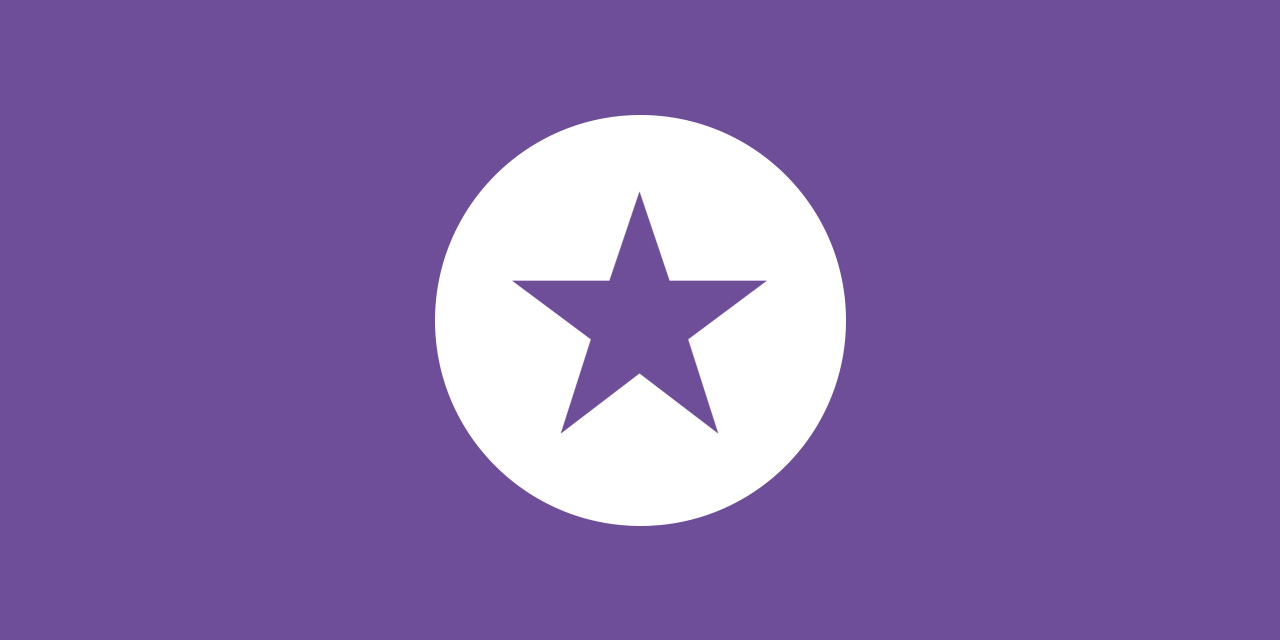
The purple star has become the symbol of my family. I have 5 sons (5 points on the star) and 1 daughter named Violet (purple). The purple star as a family emblem became the symbol of the language, and it stuck. The 5 points could be interpreted as 5 regions on earth (Americas, Europe, Africa, Asia, and Oceania) all connected (in friendship!). The white circle represents the unity of living on the same planet. Purple is a nice color. 🙂
Basics of the Language
For the curious, here’s a quick snapshot of the grammar. A full breakdown lives on the official site. Here’s a quick glimpse of where the language is now grammatically. More will be added to the official website vunakish.org, so if you’re interested, please go there and follow along.
Design Philosophy:
Meant to be easy for the world to learn, pronounce, and speak. Vocabulary words are sourced from 160 languages around the world and sounds which certain regions may struggle with are avoided or banned. The language is also meant to be expressively powerful and efficient, saying more with less words.
Pronunciation and Script:
The Latin alphabet is used, but y and q are not. C is never used except with h to form the hard Ch sound as in Church, Chip, or Chick.
The vowels are all pure vowels and only 2 diphthongs are used: ai and au.
Word Order:
Sentences follow the same structure as English: Subject–Verb–Object.
The dog (subject) bit (verb) the boy (object).
Nouns:
Nouns always end in a consonant. Plurals add -i, and possessives add -s.
dom → domi (houses) → domis (houses’).
Adjectives:
Adjectives end in -a. Both are consistent: no exceptions.
Verbs:
All verbs end in –en in the dictionary. This is the infinitive (“to do x”). Example: Kiben (to run).
Tense is marked with one simple vowel:
–o (past), –e (present), –u (future).
Add –z for an ongoing action: –oz / –ez / –uz.
There are no irregular verbs.
Once you know a verb root and the 6 endings, you can form any tense easily.
Examples: Mi kibu (I will run), Vi kibo (You ran), Mini kibez (We are running).
How would you say, “You are running”? Hopefully you found that question easy to answer!
Pronouns:
Pronouns are clean and regular, with simple patterns for possessives and plurals. Words for here and there behave like pronouns too.
Common pronouns: Mi (I), Vi (You), Hi (He), Shi (She), Gi (It), Mini (We), Zini (They).
Copulas (“to be” words):
Instead of a dozen forms of to be, Vunakish uses small particles:
e = is, o = was, u = will be.
There are also special forms like a (in a state), az (in a continuing state), making descriptions clean and unambiguous.
Because pronouns and copulas are so regular, you can easily replace the i in a pronoun with the copula or tense marker to condense sentences by one syllable.
Example Contraction: Mi kibu (I will run) could be Mi u kib (I will run) or even better- Mu kib (I will run). Here Mi + u is identical to I + will in English, forming I’ll.
Questions:
Use a question word at the beginning or end: Kauno, Kecho, Kojo, Keno, Kaiso (Who, What, Where, Why, How).
All question words begin with a K and end with an o.
To ask a yes/no question, add keo to the beginning or end, example: Keo vi kibo? or Vi kibo keo? (Did you run?)
To question only one part of the sentence, in English we’d emphasize the word, as in “Did YOU run?” In Vunakish, add a Ko right after the word in question: Vi ko kibo? (YOU ran?)
These two forms can be combined for further emphasis: Keo vi ko kibo? (Did YOU run?)
Word-Building:
The language has a rich but regular set of prefixes and suffixes that work like Lego pieces. You can express ideas like “good,” “bad,” “cause to,” “member of,” “container,” “tool,” “profession,” and more with predictable building blocks.
Intentionality:
Vunakish shows whether someone acted intentionally, accidentally, under obligation, by attempt, or with inability—all using a simple w- + vowel prefix on the verb. This makes meaning precise without extra wording. Example: Hi wikibo (He tried to run) or Shi womanje (She can’t eat) or Hi wujodo (He was forced to drive). Here we can begin to see a glimpse of how Vunakish is more efficient than English in terms of sentence length and information density.
Negation:
Negation is always no, placed directly before the verb. No double negatives, no ambiguity.
Learn More
Thank you for taking the time to read about my conlang project. There are many more things to learn about Vunakish, so check out all of the available information at the official website. Much more to come!